Modesto Marathon big-picture postpartum training overview & goals
Barring catastrophe, I’ll be racing my 26th marathon on Sunday morning and my first 26.2 since giving birth to my second daughter a touch over 7 months ago. I’m letting all that number jargon sink in for a second …
In these final few days before the race, I wanted to put digits to keys and talk about my postpartum training in bigger terms so I can further internalize how everything has gone this time around, over and above what I did by writing training overviews that highlighted each week’s major workouts. Maybe there’s an off-chance that my bantering will help someone out there, but what’s more likely the case is that I just need to talk through some things. 🙂 My marathon training experiences have taught me that it’s really easy (and tempting) to let the day-to-day minutia completely obscure the long-term, big-picture process. The minutia is important, sure, but it’s not the end-all, be-all. Looking at things in their totality – what I’m trying to do here – I think is more beneficial. One bad (or good) run does not a race make.
My yammering makes this all sound much more serious than it needs to be. It’s running. It’s marathoning. It’s all in good fun.
New training
A little back story: after I gave birth to my first daughter in 2011, for the rest of that year and into 2012, I trained as I always had; each week’s training topped out at no more than about 50 mpw (because anything over that would send my ITB into disarray), replete with a weekly long run, some semblance of speed work (typically only 800m or 1mi repeats), and a few rest days each week. On my own accord, at my first marathon postpartum in 2012 (about a year postpartum), I finally got my years-old 3:37 PR down to a 3:34, which was elating. In 2013, that PR went from a 3:34 to a 3:31 (in January at Houston) to a high 3:20 (in April at Eugene) down to a low 3:20 (in October in Chicago), which is where I’ve been (agonizingly, frustratingly) sitting. Don’t get me wrong: I’m proud of my 3:20 (and the low 3:2x I have since posted on hard courses), but I also think that I’m capable of more.
I changed virtually everything about how I approach marathon training from 2012 to 2013 – literally almost everything, from the fuel I take, to the socks that I wear, the number of weekly miles I run (going from a 50 mpw max to closer to 70-75, without ITB issues!)… pretty much if there were a variable in marathon training I could change, I did change it in 2013. In the biggest scheme of things, I attribute the performance gains to a completely different way of training (going from my own ‘kinda wing it kinda base it on prior Boston training approach’ to Pfitzinger), but as is to be expected, when you train the same way for many years – as I have been since 2013 – things might get stale. Your body adjusts. You plateau. (Sidenote: there is always room for error too, obviously. I made some race day mistakes at many of my marathons in 2014, which no doubt hindered me, but I think perpetually training the same way since ’13 also played a huge part).
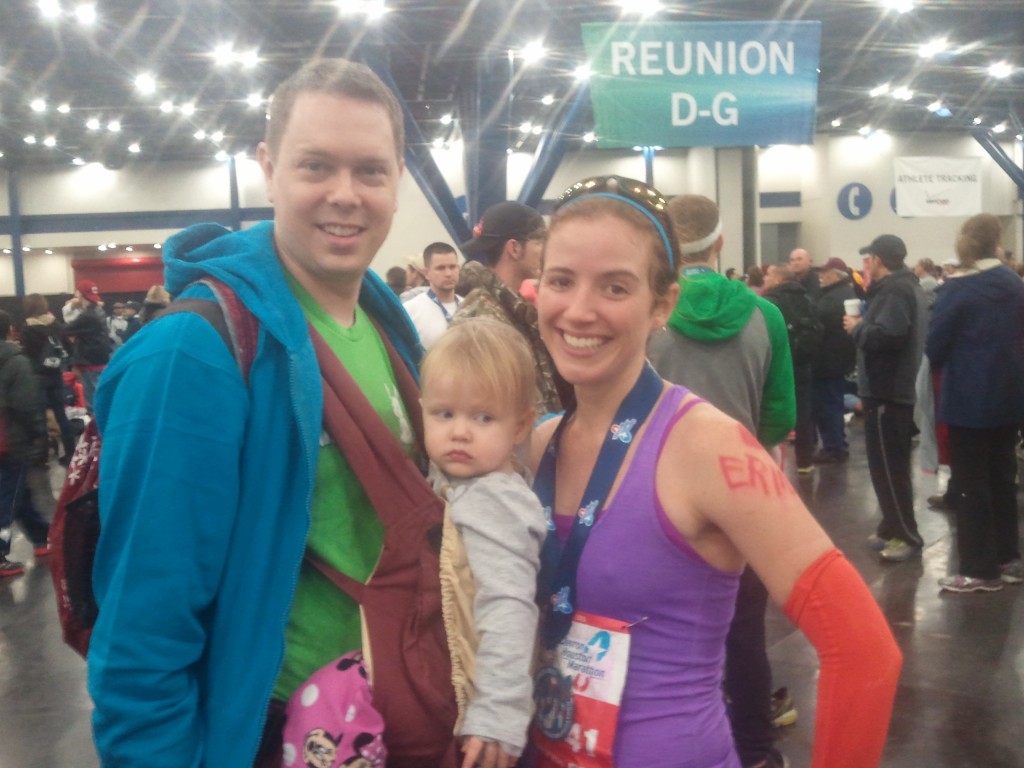
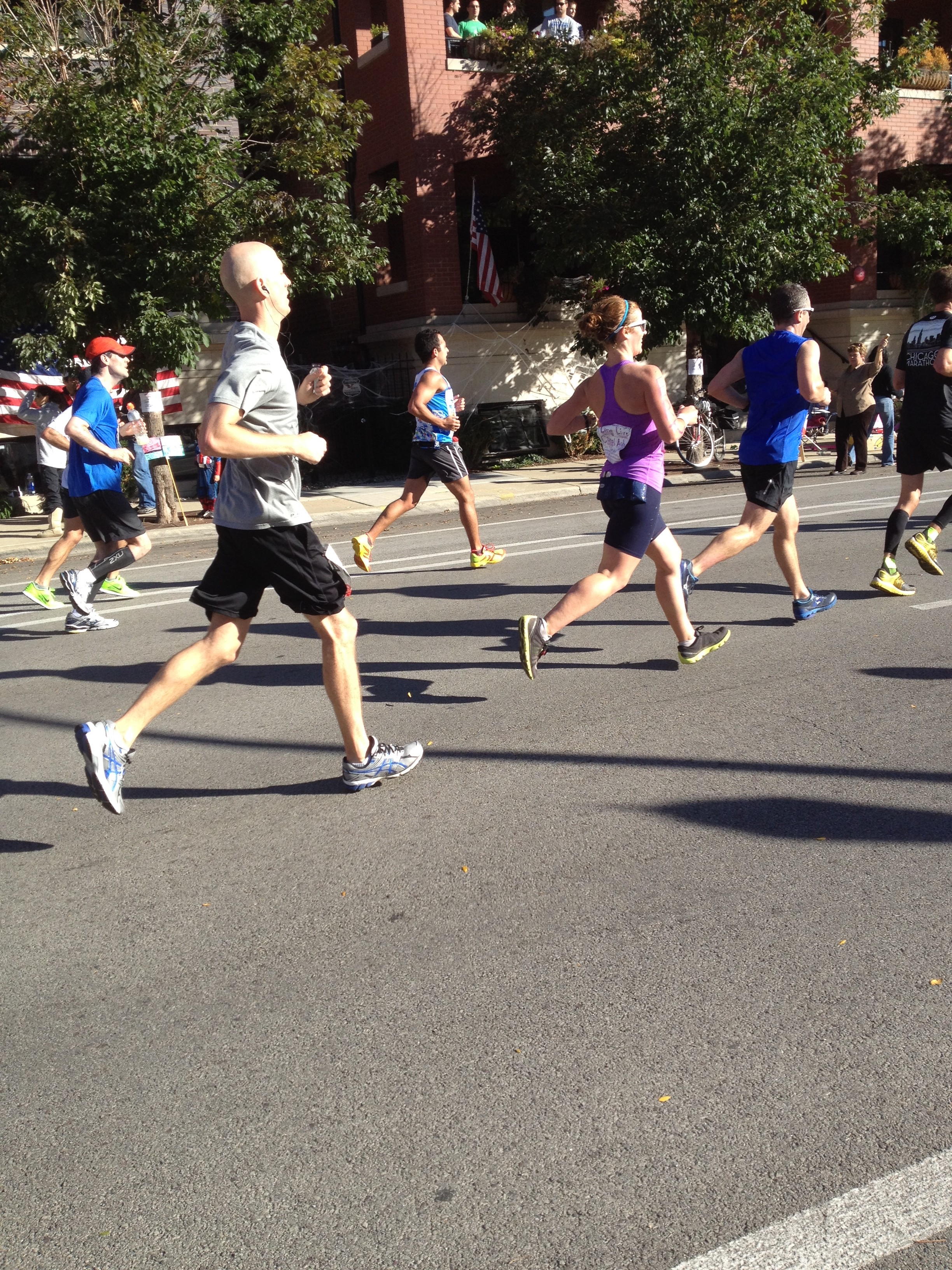
For this training cycle, I paid Jason Fitzgerald at strengthrunning.com to write a custom plan for me, and I think this was a smart move. I sing his praises routinely because he’s a “real” running coach who obviously knows his stuff. When I was following Pfitz, it was rare that I could ever hit my tempo paces each week for one reason or another. This time around, I gave myself a complete attitude shift and went into each tempo run – ones that I had come to fear, thanks to my Pfitz experience – with a clean slate and just hoped to run what was in me that day… and you know what? My tempo runs were among my strongest each week. I routinely hit the prescribed times, week after week, and I actually kinda came to enjoy the opportunity to “run fast for X minutes” each week. I’ll be damned.
During this training cycle, some weeks I felt like I was still in ultra training mode, doing back-to-back double-digit runs every weekend (with speed stuff on Saturday and LR on Sunday), but that’s what works for my family and me right now, so I just went with it. Though I didn’t race at all during this cycle, early on, in December, I posted an unofficial 5k PR during a tempo run, breaking 20 for the first time, and I’ve never felt stronger on tempos and speed stuff than I have this time around. I posted virtually all of my weekly mileage while pushing a stroller, saving the weekend speed and LR stuff as my time away from the kids, and stroller running (with the big one or with the little one) I think also strengthened me in ways that I wasn’t anticipating.
With all of this in mind, then, I feel like I’m stronger and maybe faster right now than ever – something I didn’t think I’d be saying at just about 7.5 months postpartum. I’m not an idiot and realize that none of this guarantees a PR race, but I’m headed into this race knowing that I’m ready.
Going into Modesto, after running a satisfying Berkeley time on not-HM-specific training, I wanted to post a training cycle that I could be proud of, and I am. That in and of itself is gratifying. A strong race would be the icing.


Strength stuff
It’s so easy and tempting to be a lazy runner – a runner who only runs – and I have been that way before. We all know how important it is to do the ancillary stuff, but it’s not fun; it’s not “sexy” like posting a ton of miles; and at the end of the day, it’s just tedious. Coming into this training cycle fresh off my pregnancy and childbirth, I wanted to make sure that everything was in “working order,” which was what led me to including postpartum-targeted core and strength week nearly every week, usually a couple times a week, if I got my shit together (read: used my 20-minute windows of time wisely). I enjoyed the Moms Into Fitness DVDs during my second pregnancy and continued with the 30 day core program throughout this cycle, and while obviously the strength of my transverse abdominus isn’t going to dictate how quickly or well I can cover 26.2 miles, taking the time each week to account for muscle imbalances and weaknesses that pregnancy (and childbirth) has wrought has been time well spent, as far as I’m concerned. I think paying attention to these little details has helped me even in my day-to-day life now, too, since my lower back no longer feels shot at the end of the day. Bonus: I’m pretty sure the strength stuff helped lean me out a bit and made me lose some weight/inches. Honestly, I think anyone would benefit from these DVDs, and especially so if you’ve had a child, and the workouts are totally manageable (~20-30 minutes). I’m a big fan now (and yup, I’ve paid for all of ’em… nothing sponsored here). I’ll keep this in my repertoire for sure.
Fueling
As I wrote before about breastfeeding and training, fueling appropriately has become paramount not only to get me through training runs but also so my body can make milk for my growing babe. What this has meant for my training, aside from the fact that I feel like I should own shares in my local grocery stores, is simply that I have to eat before I run – even if it means I’m making myself eat and drink at 3 or 4am – because otherwise I will legit feel like I’m drunk while I’m running. (It sounds funny, but let me assure you: it sucks). Admittedly, I have felt pretty silly eating prior to “just” a 3 or 4 or 5 mile run, but experience quickly taught me in this cycle that this was non-negotiable. Chalk this up to listening to your body, gang. (Case in point: I thought having a banana before a 6 mile speed sesh on Wednesday would be sufficient. Negative. I spent the better part of this run trying to stay upright and not end up in someone’s front lawn).
Throughout this cycle, I also took the time to experiment with different types of gels and gus, taking a step away from the Accel Gels that I’ve been using since Houston ’13. Ideally, I’d like to find something vegan (since AG has whey in it), so I tried various types of Gu (ugh), Huma (super ugh), and Honey Stinger (the gels are decent, the waffles are delicious, but the overarching honey issue doesn’t help my vegan cause). Ultimately, I ended up fueling most of my LRs with the HS waffles and will probably alternate between those and AG come race day. Palatability is hard to come by (for me) with this stuff, so if you have some recommendations of a brand you really like – especially if it’s vegan – I’m all ears. I’d say that I eat vegan 99% of the time; this is part of that 1% where I defer to my self-ascribed “almost vegan” label.
The bullshit of the motherhood handicap
As I wrote before, training for a marathon while breastfeeding has been doable with some planning and creativity (and flexibility). Obviously, my children are more important than my marathoning hobby. That said, I am a human with interests beyond my children (as hard as it may be to believe that moms can want to do things aside from being with their children 24/7/365), and I want to do well at this race and in future races. I’ve trained for Modesto as best as I can, posting 95% of my prescribed mileage – and yes, I did the math; I’m so stoked to be returning to “my people” for the first time in over a year; and as is usually the case, I have so enjoyed just the process of marathon training. The race, the product, is important, sure, but in the grand scheme, it’s kinda got nothing on the hours and hours and hours of training, the process, I’ve posted to get there.
This is all kinda tangential to a point I want to make about being able to run a good marathon and be a mom. There’s this great, super-quick article about how Kara Goucher (a mom to a five-year-old) placed fourth at the Oly trials – becoming an alternate for Rio – and how reporters characterize her. She basically says that she has conflicted views about being labeled this type of runner or that type of runner and a mom (emphasis necessary) because to her, when reporters recognize her as such, it’s almost like a “consolation prize,” like “oh, well, at least you’ll always have your son,” implying that yes, you may not fulfill your immediate career goal (like qualifying for Rio) but at the end of the day, oh well, you’re a mom, and you being a mom matters more than being able to represent your country in the Olympics or do well in your career. It feeds into the shitty and forever-old “having it all” mentality that fuels the dumbass mommy wars (career versus family, etc.), from which I stay far, far away. It’s bullshit because we moms can want to compete and perform at our highest abilities and still be moms. One does not negate the other.
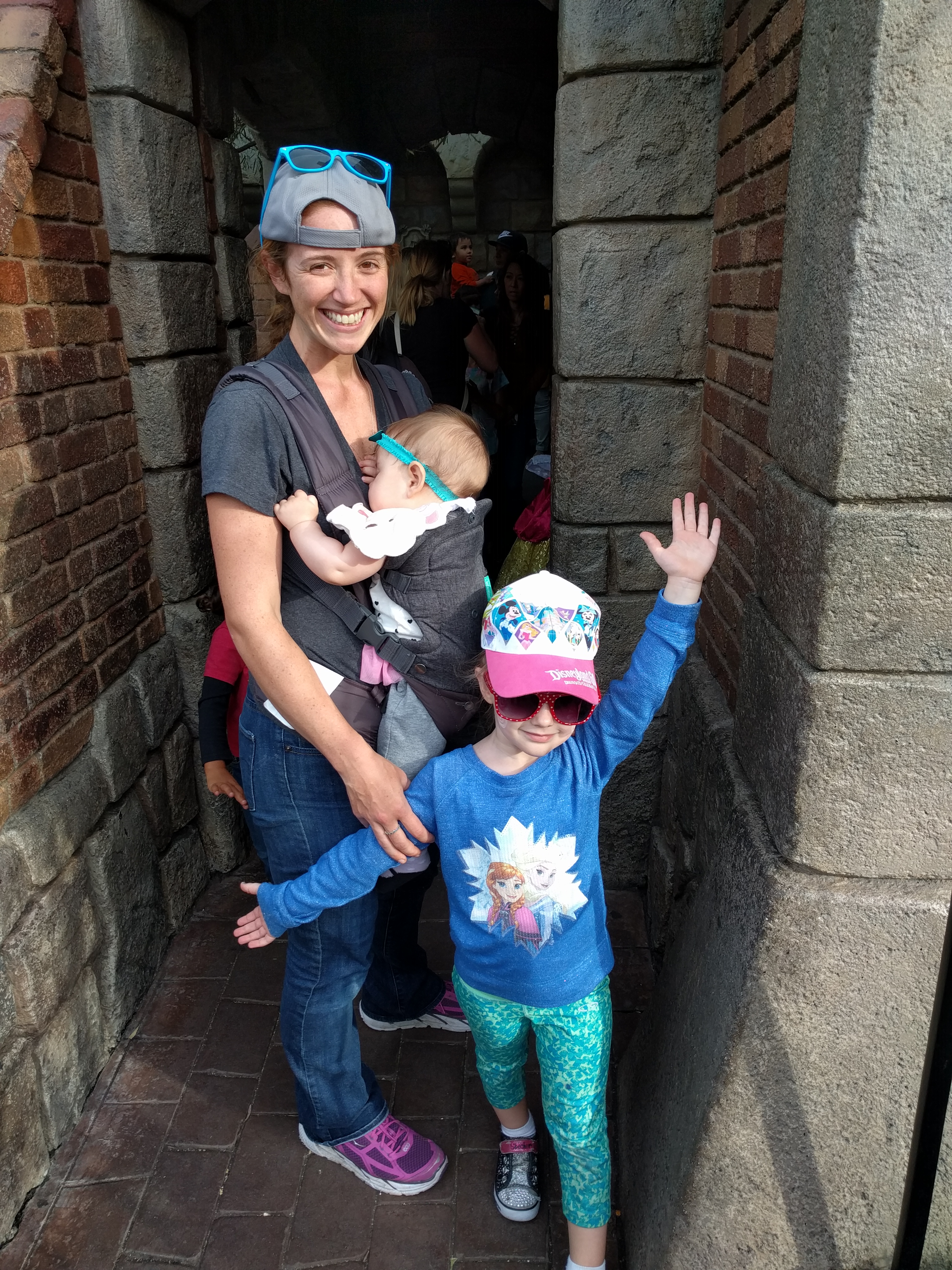
While I obviously don’t have to deal with this on the order of magnitude that Kara Goucher does, I nonetheless identify with her a bit. Any race performance I post is on me; no one in my family cares about my marathoning hobby as much as I do. Even with my two kiddos at home, the beings whom I have literally grown and whose livelihoods I have sustained (am sustaining), being a mom (times two) doesn’t handicap my ability or my desire to post a decent marathon. Sure, it has made for more-complicated-than-usual training and has necessitated some creativity and flexibility at times. What it hasn’t made me is weak; if anything, it has made me even more fiercely competitive with myself and even more eager to chip away at my potential in this grueling endeavor. If I have a shitty run, my first thought isn’t about wanting to go be with my children; it’s about what I can do next time to improve. I want to show my family, my impressionable girls, what can happen if they work hard toward realizing a goal, and in the process, I want to prove it to myself, too. In sum: yes, I am a mother, and I’m also a runner. I want to kick ass at both.
Goals
Ah, goals. It wouldn’t be a final training overview and goals recap without talking about race day goals. It’d be easy—so easy—to slap a number here that would dictate my success on Sunday, but I’m not going to; it’s just much too short-sighted. A time on a clock only tells this much (pretend I’m showing you a tiny, tiny amount) of the story.
My singular goal for my running in 2016 was to go forth and kick ass. This is as nebulous a goal as there ever was, and I kinda like it that way. I could say that I want to go for a certain time on race day, but I don’t really know what that is right now and won’t really know until I start running. So much on race day is in our control, obviously, but I think it’s also important to acknowledge that so much more is beyond us. Sometimes the best (if not the only) thing we can do is show up for the ride and maintain a positive attitude.
My plan, then? To go forth and kick ass.
I will see what’s in the tank on Sunday and will execute accordingly.
It will be a blast, and I am so excited – thrilled – to be out there.
Thanks for the encouragement throughout the training cycle 🙂 xoxo