Browsed by
Tag: motivation

Two Hours – by Ed Caesar – book review

Two Hours – by Ed Caesar – book review

Though I’ve considered myself a runner for more or less my entire life, well before I broke out my running shoes, I buried my nose in books. In fact, as I think I’ve said elsewhere somewhere on this blog, I have distinct memories of being young (elementary school-aged), and when I’d put out my clothes for school each night, I’d also put out which bookS I was going to bring with me that day. Avid reader is an understatement.

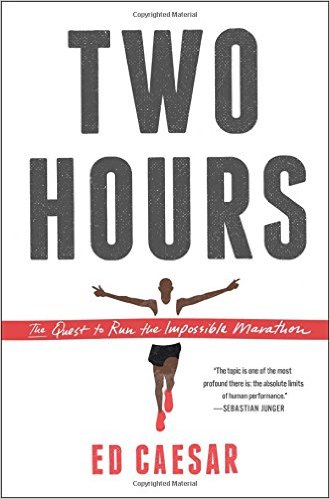
Anyway, it probably comes as no surprise then that for as much as I love to run, I also enjoy reading about running. I recently came upon a new-to-me book, published in 2015 by first-time author Ed Caesar – Two Hours: the Quest to Run the Impossible Marathon. No one sent me this book; I’m not under any obligation to talk about its merits or demerits; I just simply like to talk about running … and books … and books about running.
51kqth8TwxL._SX328_BO1,204,203,200_

The thirty-second synopsis is this: it’s a book about the possibility of a human being – specifically, a male – being able to run 26.2 miles (a marathon) in under two hours (specifically, again, 1:59:59). If you’re not a marathoner and you don’t know how that math computes, allow me: that’s 4:34 minute miles for 26.2 miles.

That’s, really fucking fast.

Like really fucking fast.

More broadly speaking, Two Hours is about the limitations – self-imposed, psychological, physiological, biological, or hell, even socially – of humanity and our potential to overcome them. To say that running a marathon that effing quickly is an exercise in the serious pursuit of a serious unicorn, or an exercise in pushing the bounds of humans’ endurance, is a serious, if not offensive, understatement. This book explores the history of the modern-day marathon as we know it, following along a historical trajectory beginning at what we understand to be the birthplace of the marathon and culminating in modern-day, at the Berlin and NYC ’14 marathons.

Much of the book follows along the fella whom Caesar regards as a prime candidate to come close to that coveted 1:59:59, Kenyan Geoffrey Mutai, who has (among other accolades) the seriously impressive attribute of having run the world’s fastest marathon at Boston ’11 (2:03:02). The heartbreaking caveat here, of course, is that Boston is ineligible for record times (because of the course’s point-to-point setup and because of its net downhill), and to add insult to injury, Mutai also had what some consider an unfair advantage the day that he ran and won Boston – a tailwind for almost the entire 26.2 journey from Hopkinton to Boston.

Caesar expertly intertwines Mutai’s biography with the trajectory of the marathon and its contenders over the years. Included in the story of the marathon of course are other key players over the years – Haile Gebrselassie chief among them, as well as the late Sammy Wanjiru – and how they have influenced the sport and, either directly or indirectly, Mutai, himself. I love this type of writing because it doesn’t really matter if you’re a marathoner or hell, even a runner; it’s just fantastic, seamless, “human interest” type of writing that just so happens to be to the backdrop of marathoning.

Being that it is about running, after all, the book also spends a little bit of time exploring some physiological aspects inherent to running and why, exactly, these details matter – things like an athlete’s VO2 max, altitude-based training, and dietary differences. Even with this “scientific” information, which might immediately turn people off who aren’t in the sport, Caesar still writes about it in a way that makes understanding these aspects’ importance completely accessible to the average reader. In other words, fear not: you’re not reading a double-blind, peer reviewed, scientific journal article about the molecular biology of the world’s best marathoners. Yes, you’re reading about what forces interplay to make two-oh-three-ish guys (marathoners who complete the distance in about 2 hours and 3 minutes)on the biological level but – more than anything – on the societal levels. This key fact is what makes this book so compelling and interesting.

The elephant in the room (book?) here that Caesar didn’t even touch until chapter 8 (of 10) is everything surrounding doping that has engulfed the world of professional running. I can understand this, and at the same time, I don’t. It is horrible that so many professional runners have doped during some of the biggest matches of their lives – cheating themselves but more importantly, the clean athletes who should have won – and unfortunately, more often than not, these allegations don’t appear until years after competition. What really sucks is when an athlete’s country has been riddled with doping allegations and confirmations – as in the case of Kenya – because it implicates clean athletes, perhaps athletes like Mutai, who rightfully earned their wins. Caesar’s chapter on doping illuminates this point head-on as he details how Mutai has been accused over the years of doping – and especially once he became successful year after year at some of the World Marathon Majors.

As a reader, I was expecting Caesar to delve into the doping issues much earlier than he did because like many other running fans, I am unfortunately suspect of amazing, maybe-too-good-to-be-true winning times. Doping sucks for the athletes, no doubt, but it also sucks for fans because it’s no longer easy to just accept our athletes and their talents being the result of hard work and genetics. My point here is just to say that I was surprised that Caesar took as long as he did to talk about doping in the marathoning world, but at the same time, I don’t know if expounding upon the issue any earlier in the book would have made any difference. Damned if you do, damned if you don’t, I guess.

Here’s the biggest takeaway about Two Hours. Yes, it’s a sports book; yes, it’s a book about marathoning; yes, it’s a book about how and when and if a human male, probably Kenyan or maybe Ethiopian, will ever have the biological, physiological, and psychological wherewithal to successfully race 26.2 miles in under two hours, but really, it’s a book about the human condition and experience and how we voluntarily challenge ourselves.

We, as a species, tend to think things are impossible to overcome – we simply can’t fathom it – until one day, we finally do.

The best example: for the longest time, it was impossible – against any sort of scientific or logical knowledge or spiritual feeling – that a male human could run a mile in under four minutes.

A sub-4 mile was impossible until one day, it wasn’t (props, Sir Roger Bannister). And once this suddenly became possible, we as a species started to do it … again. And again. And again.

So many of us, myself included, place self-imposed limitations on what we can do in our running or athletic capabilities (but also probably in other life pursuits, too), and in the process, we shortchange ourselves.

We write our story that says that we can’t do this or we can’t hit this pace, and for worse – not better – that’s what we believe; the story that we ascribe to ourselves is the story we subscribe to, day in and day out.

Though it may be mind-boggling to fathom a human male covering 26.2 miles in under two hours, we are doing ourselves a serious disservice to discount the possibility of it ever happening. It’s like believing that today’s professional marathoners are the fastest and best that they’ll ever be for the rest of time, that there will be no advances in training methodologies, technologies, or any other useful aspect to marathoning in the future that will allow humans to get faster.

We have to be kidding ourselves if we think that humanity is already in its finest and fastest hour.

In case it’s not totally evident, I really enjoyed reading Two Hours in the throes of my marathon training – my first postpartum and thus, my first in over a year – because it leaves me excited for both humanity’s potential performance at the distance and more personally speaking, my own. I have neither the desire nor the talent to ever try to run a sub-2 marathon, but hitting a sub-3 sometime in my life is definitely on my list of big, exciting, scary-ass goals (though I’ve got some work to do first!).

Two Hours is a fast read. Go pick it up, and tell me what you think.
Modesto Marathon ’16 training: the first bit

Modesto Marathon ’16 training: the first bit

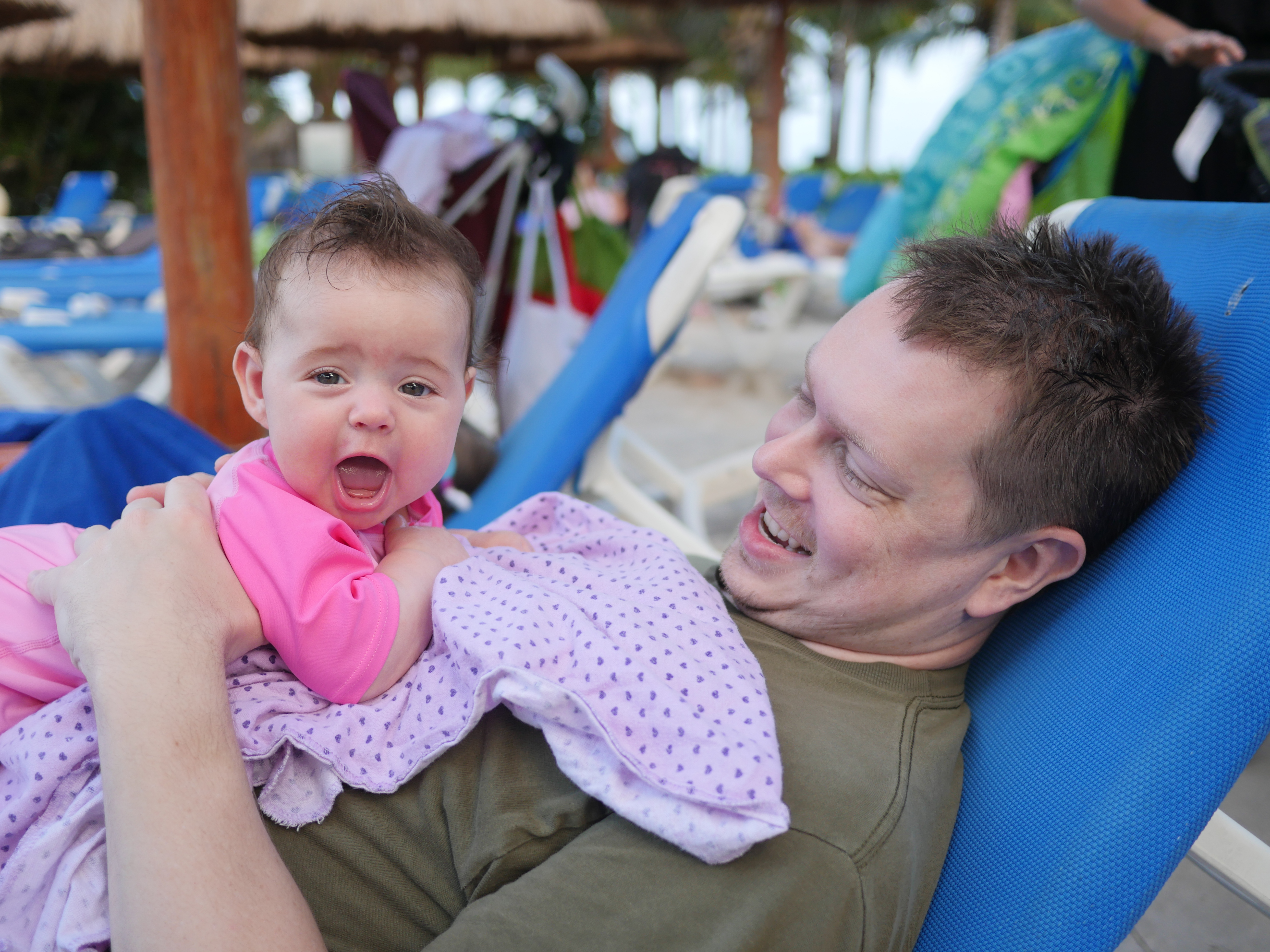
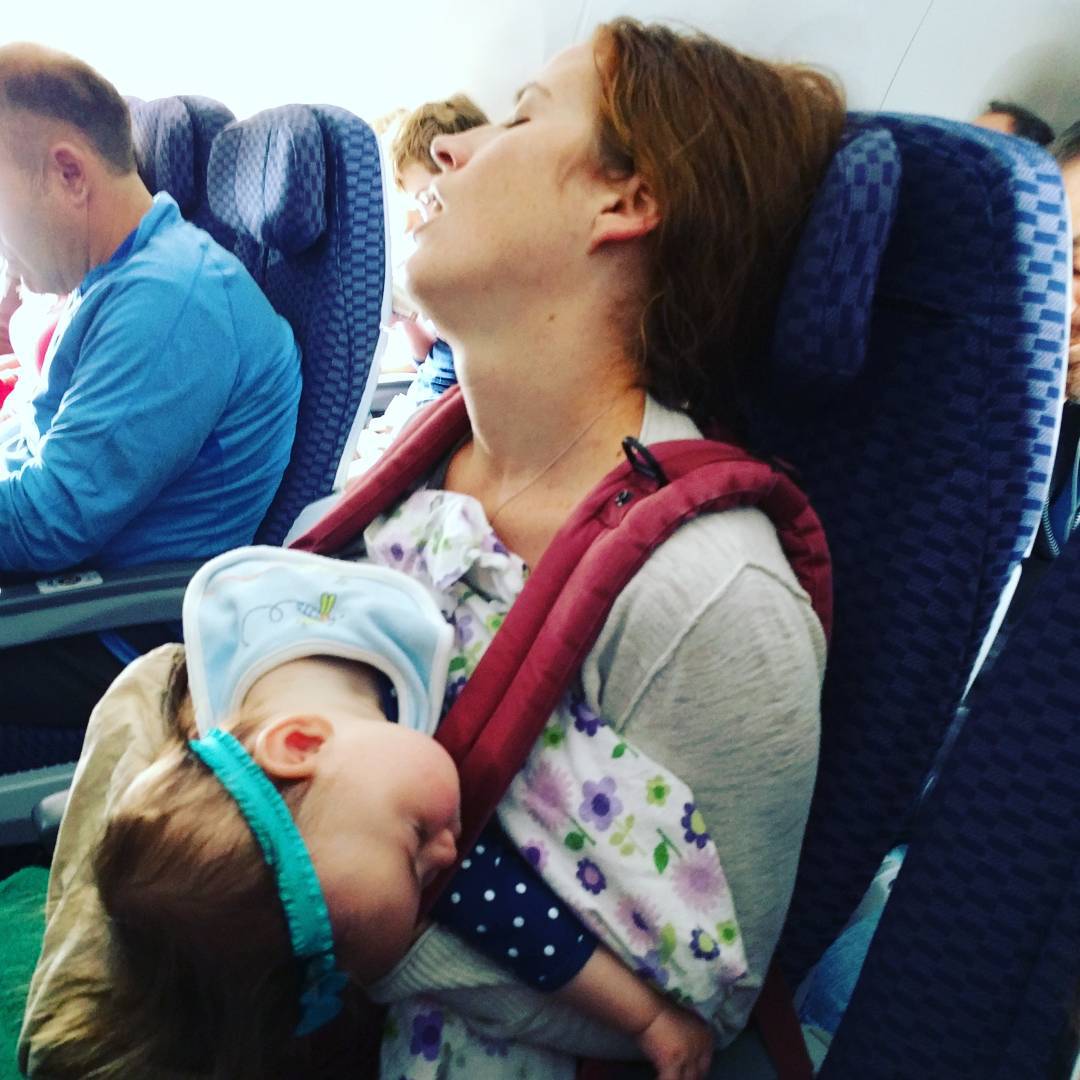
Hello and happy new year, ya’ll. Hope yours was lovely. Christmas with the kiddos was a lot of fun, and shortly thereafter, we went to Playa del Carmen to meet up with family. It was a blast, and the baby did well on her first flight experience (though she wanted to party the entire 5.5 hour flight back home… oy).

928386_209384812736078_269124870_n
Going to Mexico = tiring
index
Coming from Mexico = baby on a tray table!

With about 10 weeks to go until the Modesto Marathon, I thought I’d write out some quick ruminations on how the first “bit” of training has gone. Some background: I’m a Pfitzinger acolyte, and he divides his training into mesocycles. This time around, I’ve taken a hiatus from my beloved Pfitz and am instead using a custom plan developed by Jason Fitzgerald (of strengthrunning.com fame), customized for yours truly. I’m not writing an overview based so much on mesocycles as I am on a need to vom some thoughts out and think things through.

The big question mark – kinda huge, actually – is that Jason has based all of my pacing guidelines/targets on what I’ve done in the past (roughly, about the past 4 years, since I had A), so it is a bit of a gamble to know exactly how attainable the targets are since I’m coming into training freshly postpartum and off a year of not racing racing, let alone racing a marathon. You never know how things will fare until and unless you try, though, and marathon training is inherently an experiment of one, so I’m just taking things a day at a time and adjusting as necessary. It’s the best and only thing I can do – rolling with things – so you can bet your bottom dollar (who the hell says that?) that that’s my MO.

index
I see such weird shit on my runs

The other thing that sometimes rattles me is that I’m working on targets that took me a good two+ years postpartum (after having A) to hit mere months since having Spike. That said, I keep reminding myself that how I am as a runner – my mileage volume, my strengths, my racing experience, whatever – is radically different now. In unscientific terms, I think I’m coming from a different running base, so naturally, my training these days will evolve differently than it did after my first pregnancy. Day at a time. Trust the process, trust the process…

Rather than rehash each week’s training (since I do it daily on Garmin, Strava, and DM), I’ll just highlight the key workouts – the speed stuff and the long runs – that I’ve posted so far. Jason’s program is 18 weeks, but it wasn’t until about 16 weeks in that I committed to Modesto. I usually train for marathons in 10-12 week segments, but hey– first marathon postpartum, I can use all the help I can get.

Weeks 16 & 15

speed: 8 mi with last 4 at steady state (7:10-25 target)

I ran this workout both times out of my home, running up to the base of the foothills, which naturally meant that on the return – when I’d begin my SS miles – I’d be on a ever-so-slight decline. Having not done any speedwork since TSFM ’14, I had no idea how this would go or even what these paces feel like in the first place. Week one’s attempt: 6:38, 6:49, 6:59, 6:56. I clock-watched because I have no feel for speed, and while it was pretty awesome to see some continuous sub-7s for the first time in a while, I internally scolded myself because the paces are prescribed as such for a reason. The next week’s attempt, run over the same route, was mildly more successful: 7:01, 7:04, 7:09, 7:00. Funny how much harder the second week’s attempt felt…

distance: 13 miles (fully conversational pace, 7:45-8:45)

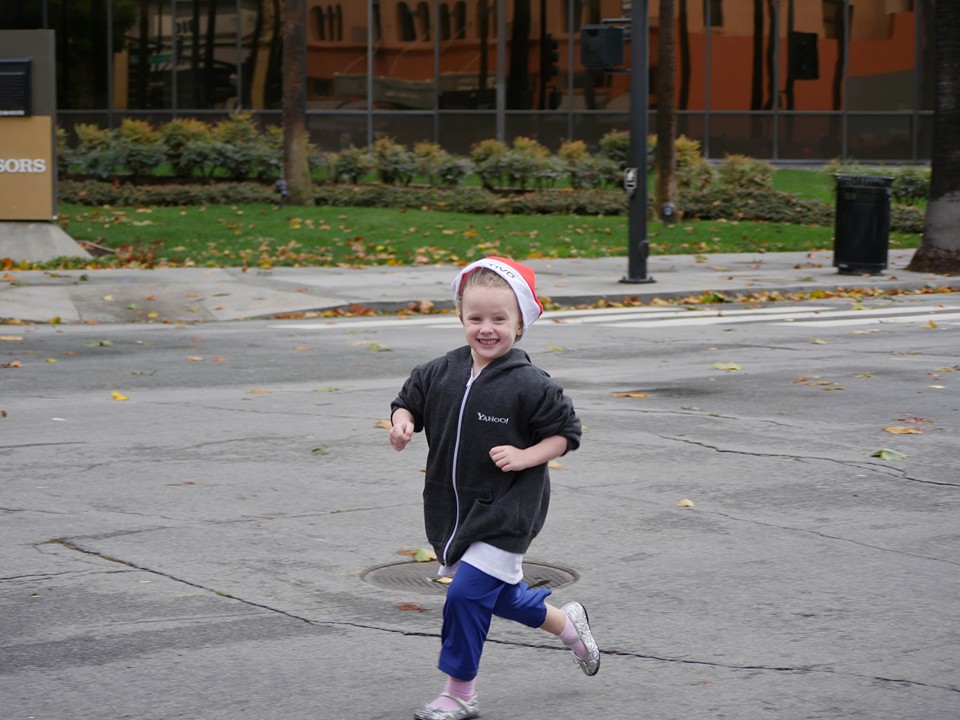
Again, I stuck close to home for this LR and ran the rollers between home and the adjacent town, getting over 500′ of gain with an 8:18 average for 13.31. I understand that the Modesto course is very flat, but I enjoy running hills – remind me later I admitted this – and they kept the LR interesting. When I was supposed to run 13 the following weekend, I bailed. I fell back asleep after feeding the baby before I was about to leave (because let’s face it, squishy baby cuddles > running). My running window opportunity got smaller and smaller as the day wore on, and shitty weather (Bay Area style) sealed the deal. At least my big girl got to run in the Santa Dash (after the rain deluge, before the hail storm).

10411740_10203786442100748_565904846180443476_n

Weeks 14 & 13

speed: 9 mi with miles 4-6 at tempo (6:55-7:05 target)

Speed stuff is typically the most challenging for me, in no small part because more often than not, I’m running this stuff by myself and/or in the early-ass hours of the morning. To better accommodate life and baby and my sanity, I do my speed stuff on Saturdays now and follow it with my LR on Sunday: not ideal but doable. Anyway – my first tempo in a year plus – a little intimidating. Best way to mitigate it? Get a buddy! Meredith, training for Boston, had a similar workout, so we ran a lot of this together on the GRT and in the rain. First week’s attempt: 6:34, 6:53, 7. Definitely still not easily finding the prescribed paces, and what an ugly-ass positive split in an attempt to find the right range.

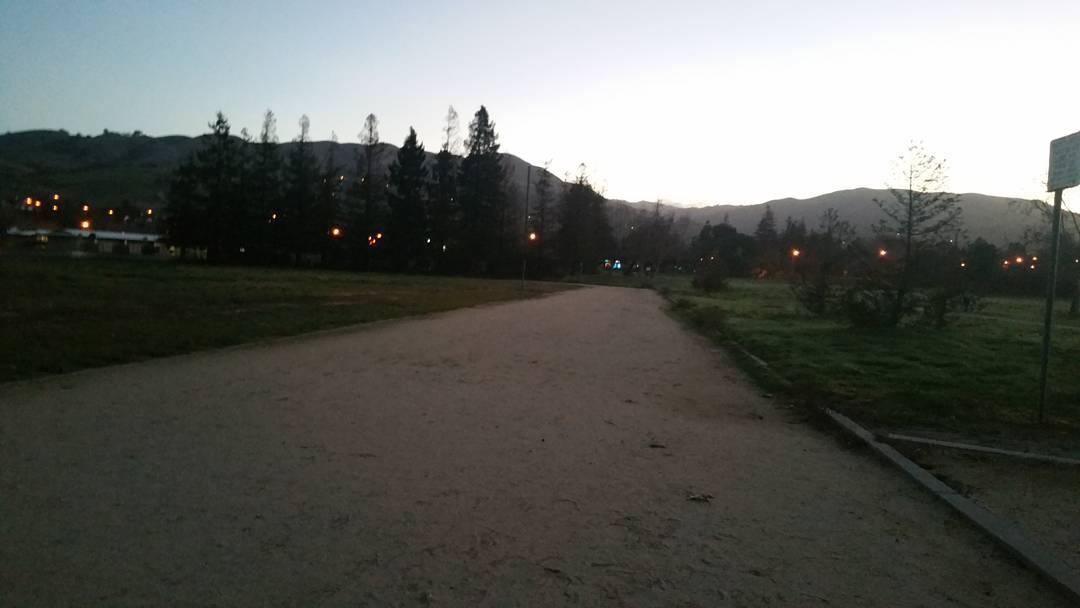
The following week (the week of Christmas) I moved this workout to mid-week to accommodate life, and I surprised myself with an unofficial 5k PR mid-tempo. wut. I ran the WU miles around my hood, getting myself to a dirt track for the tempo portion (read: uninterrupted, vehicle-free running), and yet again, my internal pace gauge was non-existent: 6:22, 6:13, 6:17 (19:31 5k). This felt fantastic – very smooth and controlled – and even with me checking my watch every 400m and telling myself to reign it in, I still felt strong and, when I finished, like I could have kept going. This feeling! Gah, so good to get a glimpse of it again. Now I just need to do it in a race for it to be Athlinks official, ha. (I’ve never gone sub-20!).

12345815_1192509997442950_621029937_n
Nothing like running laps and laps in the dark, finishing with the sunrise, and realizing what’s just happened. Wednesday win before 7am: apparently beating a forever-old 5k PR (by a minute!) during a tempo run. 9.16 mi w 3 @ tempo, 7:22 avg, with a 19:31 5k – and I felt like I could keep going. (!!!!) To the doubt that often leaves me questioning everything: peace out. No time for you, homegirl. #runwolfpack #seenonmyrun #runSJ #teamrunthebay #runlocal #postpartumrunning #modestomarathon #strengthrunning

And then I came home, and the baby rolled over for the first time, and it was Christmas Eve, and it was basically the most awesome day ever.

distance: 15 miles (fully conversational, 7:45-8:45)

I ran the first 5 solo and then picked up Saurabh for the remaining 10, averaging 8:11 on the STACT/Baylands for 15.13. The run felt pretty challenging – I’ve gotta nail down my fueling stuff mid-run and actually remember to implement it – but we did it. I’m pretty sure at the end of this run I uttered something along the lines of I cannot fathom running a marathon right now. Healthy respect, if not fear, of the distance – welcome back!

When I ran the second iteration of this run, I did it the day after my unofficial 5k PR, on Christmas Eve morning, in what was probably the shittiest conditions that I’ve run in since living here. I ran this again over the rollers on a modified course between SJ and the adjacent town and got over 800′ vert at an 8:20 average for 15.57. I was so happy to be done with this run because my feet hurt; they had gotten wet early in the run, had wrinkled, and the friction between my wrinkles, my socks, and my shoes were making me ache like hell. +1 for mental toughness I guess.

Week 12

speed: 8 miles with 6×1′ @ 10k race pace , 2′ jog in between (6:45-50)

Skipped. We were in Mexico, and even though I brought all my running stuff and my pump and could have done it, I just didn’t. It would have been a huge inconvenience, and I wasn’t interested in playing Life Tetris on vacation in order to get a run in (and most likely on a treadmill, no less). In fact, I didn’t run at all on vacation. Ask me how guilty I felt about it.

23797429689_4c4ee3668e_o

24178555355_cfb8c71b37_o-1

Distance: 15 miles with last 3 at marathon race pace (7:35)

Praise be to Allah for Meredith schlepping out to SJ early on Sunday mornings for our long runs. I hadn’t run in a week, she was coming off a tiring travel + rock-climbing schedule, so we were quite the pair on this. I didn’t read my schedule before beginning and just assumed that the MRP was a 7:30. Next time, I’ll remember to read. I needlessly worked my ass off for 7:26, 7:34, 7:22, which is funny considering how effortless my 5k time felt the week before. I chalked this up to a lot of stuff, mainly not running for 7 days, the preceding day’s Mexico-CA travel, the 4.5 hours of sleep I got and some expected welcome-back-from-Mexico gastrointestinal mid-run shit storms (you’re welcome). I’m not too worried, though it was a little discouraging to feel like my ass got handed to me in my first MP workout in over a year. Onward.

This is already ridiculously long for a high-level overview, so I’ll save the rest of my bantering for my next internal monologue … or my next post. While my confidence might be wavering a bit right now because I can’t fathom the distance again, I think I’m where I should be. I think. Trust the process… trust the process…